


🦄🌈🐴 WELCOME TO THE WORLD OF HORSE OWNERSHIP IN NEW ZEALAND!


🎉🐴CONGRATULATIONS- YOU HAVE A HORSE! 🎉🐴
We’ve written this guide in the hope that it will help make your transition into horse ownership a little smoother.
You might be a brand new horse owner, a rider returning to horses after a long break, or someone who has moved to New Zealand from overseas and is discovering that keeping horses here can be a little different.
This isn't intended to teach you absolutely everything there is to know about horses.
It is a practical guide to some of the basic things we think are really useful to know when you are getting started, from setting up your paddock and buying your first bits of equipment through to feeding, feet, teeth, worming and navigating our wonderful New Zealand grass.
So, welcome to horse ownership! 🐴💚
Let's get started.
🌳🐴 CHAPTER ONE: FIRST THINGS FIRST, YOUR PADDOCK
Before bringing your horse home, walk around the paddock and make sure the fencing and environment are safe.
Think of it much like making a home safe for a young child. Look for loose corrugated iron, old wire, protruding nails, low branches, holes, sharp edges or anything else that could cause an injury.
As you walk around, ask yourself:
“How could this hurt my horse if he was in a panic?”
A horse can be standing quietly like an old dobbin one minute, then a dog, falling branch or unexpected noise frightens him the next. When horses panic, they don't always make sensible decisions.
Make sure your fencing and gates are secure, and if you use electric fencing, check that it is working properly. ⚡🐴

🌈🐴 CHAPTER TWO: BASIC TACK
The good news is that you really don't need mountains of equipment to get started.
For basic handling, we recommend a halter, a good lead rope and perhaps a carrot stick.
We prefer rope halters because they are lightweight and comfortable for the horse.
One important safety tip is to never leave a halter on a horse unattended. Halters can become caught on fences, gates, branches or other objects and cause an injury.
We recommend a 12 foot lead rope rather than a short one. The extra length gives you plenty of room to work with your horse and means that if he gets a fright, you can give him some space rather than having him jumping on top of you.
A carrot stick can also be a really handy tool. Think of it as an extension of your arm that can help with direction and communication while allowing you to maintain some space between you and your horse. Although it looks a little like a whip, it isn't intended to be used as one and should never be used to hit or hurt your horse. It also makes a great scratching and grooming tool. 🥕🐴

🦄🌟 CHAPTER THREE: HAVING FUN WITH EXERCISE
We don't generally recommend lunging horses for exercise. Going repeatedly around in circles can be boring for some horses, and some can become stressed or frustrated by it.
However, the good news is there are plenty of great alternatives to lunging that can help keep your horse fit and healthy while being much more stimulating for his mind.
Horse agility is something you might consider, perhaps progressing into liberty work, as well as obstacles, pole work and fun groundwork games.
Even taking your horse out for a walk can be a lovely way to spend time together while getting some exercise. 🐴🌳
One thing almost every horse owner will tell you is that time is the enemy!
So, any way you can encourage your horse to exercise himself without you having to provide all of that exercise for him is a bonus.
Setting your paddock up well can really help with this. A track system, for example, can encourage your horse to move naturally around the paddock throughout the day, particularly if hay, water and other resources are positioned in different areas.
🐴❤️🐴 CHAPTER FOUR: COMPANY
Horses are herd animals, so wherever possible, we recommend allowing your horse to live with other horses, even if that's a little herd of two.
Sheep and goats can become wonderful companions and friends with horses, but for the best outcome, we recommend another horse for company.
Being with their own kind can provide horses with a sense of safety and security, as well as giving them opportunities to graze, rest, play and move around together. And let's face it, watching horses being horses together is one of the loveliest parts of owning them. 🐴💕🐴

🌾🐴 CHAPTER FIVE: INVEST IN A GOOD SLOW FEED HAY NET
A medium slow feed hay net is a really useful investment for a new horse owner.
It keeps your hay up off the ground and out of the mud, which helps reduce wastage. It also slows your horse down because he has to pick the hay carefully through the holes rather than being able to bolt through a large pile quickly.
If your horse has never used a slow feed net before, don't start with tiny holes. He needs a little time to learn how to use one without becoming frustrated.
We recommend starting with around a 4 cm hole size.
A medium-sized net will normally hold around half to three-quarters of a conventional bale of hay, which can provide a substantial amount of hay without you constantly having to refill it.
This is particularly handy when you're heading off to work or leaving the property for a few hours because your horse has plenty of hay to work through gradually. 🌾🐴
🐎🦶 CHAPTER SIX: LOOKING AFTER THOSE HOOVES
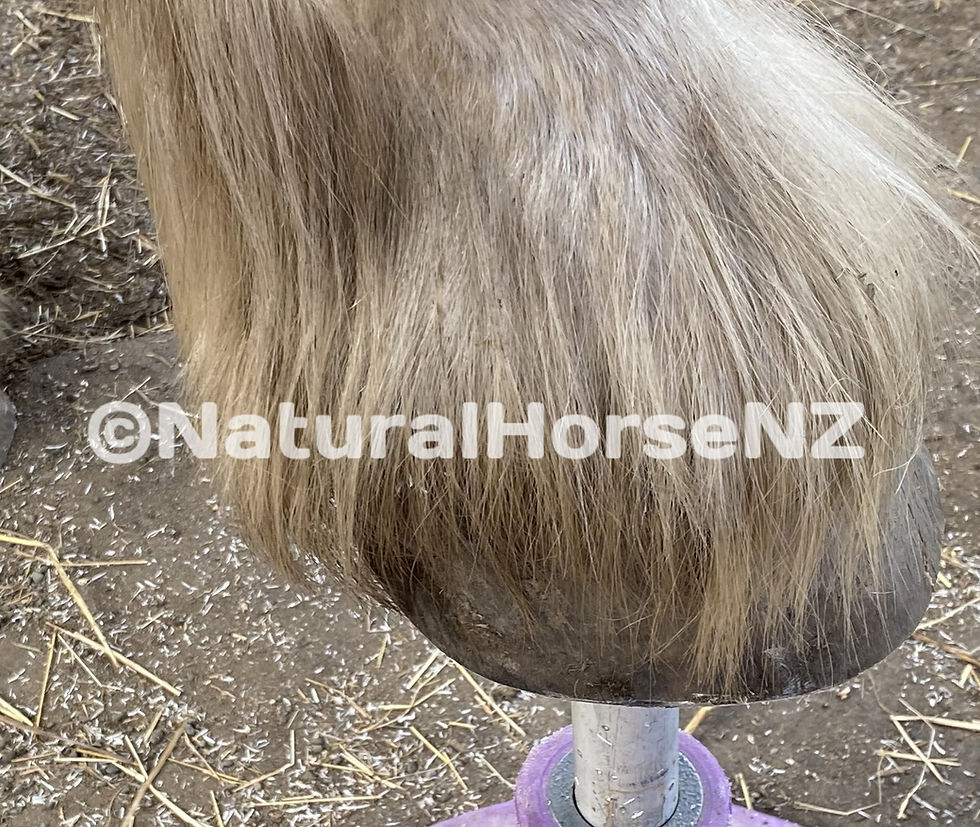
Your horse's feet will need regular attention, usually around every six to eight weeks.
You will normally use either a farrier or a barefoot trimmer, and we highly recommend getting plenty of references before choosing somebody to work on your horse's feet.
It's also worth talking to them about what you want because there are different approaches to trimming and hoof care.
Some owners choose to have their horses shod, while others keep their horses barefoot and use hoof boots when extra protection is needed.
We prefer hoof boots because they can be put on when your horse needs them for riding and taken off again when he is back home and resting.
As a rough guide, you could expect to pay anywhere from around $40 to $180 per visit, depending on whether your horse is having a straightforward trim or being shod.
It's worth remembering that this will be a regular expense every six to eight weeks when you're working out your horse-keeping budget. 💰🐴

🪱🐴 CHAPTER SEVEN: THE NOT SO GLAMOROUS SUBJECT OF WORMS!
Horses get worms.
They can pick them up from paddocks, particularly where other horses have grazed and passed manure.
Worms are a type of parasite, which means they live inside the horse and take what they need to survive from him. Some worms consume nutrients from the horse's food, which can gradually deplete him and affect his health and condition.
Other types of worms, called strongyles, including cyathostomes, can bury into the lining of the horse's digestive system and cause damage there.
This is why regular worm control is an important part of looking after your horse.
With our own horses, we generally worm twice a year, in late August going into spring and again around April going into autumn. We may worm additionally if there is a reason to suspect worms, such as a horse having shared paddocks with an infected horse.
We use a moxidectin based wormer such as Equest Plus or UltraMox, as these target important types and stages of worms that some other wormers don't.
There are also plenty of products advertised as natural wormers. We have tested the available natural options ourselves and, as much as it pains me to say it, so far none have worked.
We don't recommend over-worming either, as unnecessary use of wormers can contribute to wormer resistance.
We have a whole separate article dedicated to worms and worming, so if you'd like to know more about worms, faecal egg counts and the different wormers available,

😁🐴 CHAPTER EIGHT: DON'T FORGET THE DENTIST
A horse's teeth are continually growing, which means they need regular dental care to keep them comfortable and able to eat properly.
We recommend having a qualified equine dentist check your horse's teeth at least once a year.
The dentist can file down sharp or uneven areas so that the teeth are nice and even with a good grinding surface. This is called floating the teeth.
Keeping the teeth correctly floated helps your horse grind his food effectively and prevents sharp edges from causing painful sores, or ulcers, inside his mouth.
Make sure you use a well qualified and recommended equine dentist, and never allow somebody unqualified to work on your horse's teeth.
When you first bring a new horse home, we normally recommend arranging a dental check fairly soon after he arrives. That way you know his teeth have been checked and you have a good starting point for his yearly dental care. 🦷🐴
🩺🐴 CHAPTER NINE: YOUR FIRST VET CHECK
When you first get your horse, we recommend arranging a general health check with your vet.
This gives your vet an opportunity to have a good look over your new horse and gives you a useful starting point for his future healthcare.
Your vet can also check his vaccination history and recommend which vaccinations, if any, your horse may need based on his individual circumstances.
It's also a great opportunity for you and your vet to get to know each other before the day comes when you actually need them in an emergency.

🌱🌦️🐴 CHAPTER TEN: LET'S TALK ABOUT NEW ZEALAND GRASS
One thing we really want new horse owners in New Zealand to be aware of is something we call
Grass affectedness is when your horse behaves differently because of the effects the grass is having on his health.
That might sound ridiculous at first. After all, horses are meant to eat grass! 🌱🐴
The problem is that some of the pasture we grow here in New Zealand isn't necessarily ideal for horses. Much of our pasture has been developed with high producing dairy and livestock farming in mind rather than horses.
Some horses cope with our grass perfectly well, while others can be much more sensitive to it.
You may find that a normally quiet, sensible horse suddenly becomes spooky, anxious, tense, over reactive or behaves completely differently.
If that happens, don't automatically assume you suddenly have a training problem. Grass and diet are worth considering as possible causes.
We have lots more information about grass affectedness elsewhere on our website, but as a new horse owner, the important thing is to know that it exists.
If your horse does struggle with grass, there are lots of ways of managing how much he eats, including break feeding, track grazing, bringing him off the grass for a few hours or creating a temporary grass free area with suitable electric fencing.
You can then provide plenty of hay so your horse still has lots of fibre to eat while reducing how much grass he is consuming.
🥕🌾🐴 CHAPTER ELEVEN: KEEP FEEDING SIMPLE
When it comes to feeding, we recommend keeping things simple.
In our opinion, the best starting point is plenty of plain meadow hay, ideally fed through a slow feeder so your horse can eat gradually throughout the day.
Your horse can also have access to grass, but you may need to manage how much he eats, particularly when the grass is growing quickly.
Break feeding or track grazing are great ways of allowing access to grass without giving your horse the whole paddock at once.
As we've just discussed, too much or unsuitable grass can affect some horses' health and behaviour.
We then recommend a daily bucket feed once a day, which can include some chaff along with anything else your individual horse needs.
We've put together a recommended feeding guide here, where you can see what we use in our own horses' bucket feeds and learn more about keeping your horse's diet straightforward.
🦄🌈🐴 🦄🌈🐴 AND FINALLY, ENJOY YOUR HORSE!
Owning your first horse is exciting, occasionally confusing, sometimes muddy and almost guaranteed to involve finding hay in places you didn't know hay could possibly get! 🌾😂
You don't need to know everything on day one. You will learn as you go, and your horse will probably teach you an enormous amount along the way.
Saddling and bridling can come later. Not everybody who owns a horse is going to ride, so we haven't covered riding equipment in this beginner's guide.
If you do want to ride and need some help choosing or fitting saddles, bridles or other equipment, please don't hesitate to contact us.
Most importantly, have fun, enjoy your horse and enjoy the journey.
From all of us at Natural Horse NZ, we wish you and your horse all the very best on your new horsemanship journey.
