


🚨 LAMINITIS — IT’S TIME TO GET SERIOUS 🚨

Updated: 1 day ago
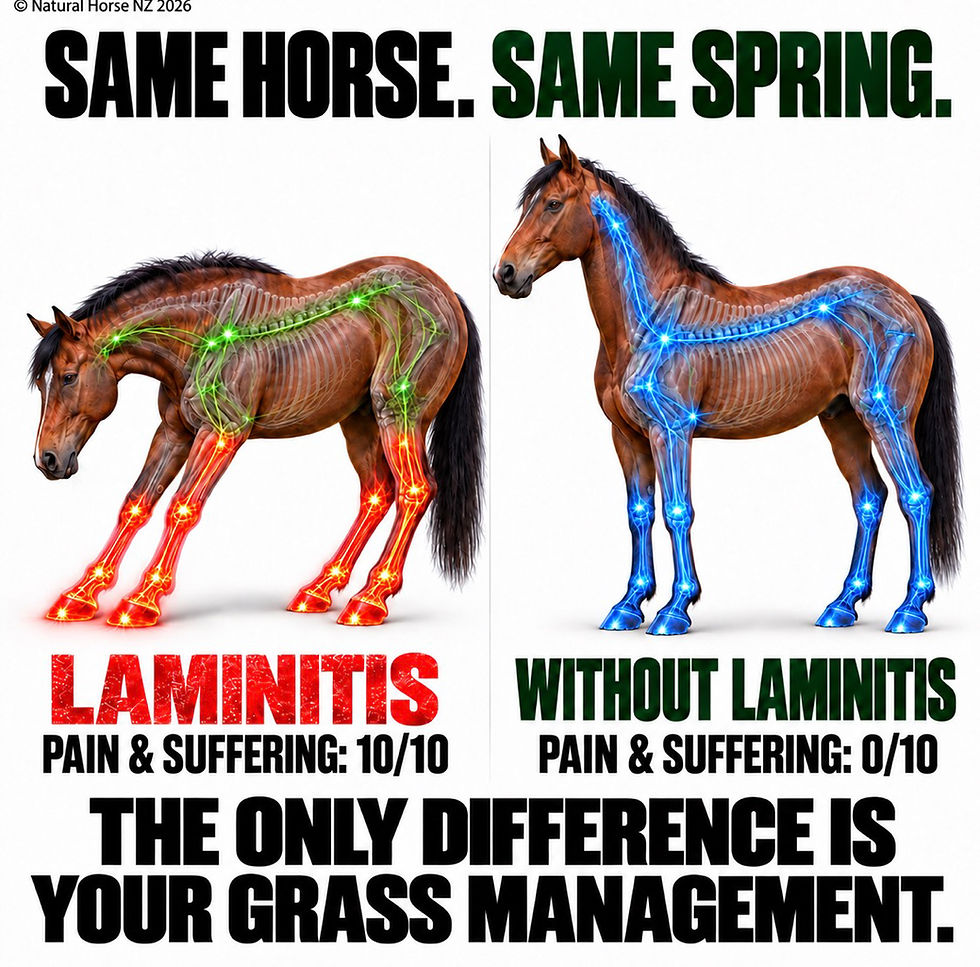
I’ve been helping people with laminitic horses for over 20 years.
Laminitis is a very nasty medical condition that is excruciatingly painful for horses. The only way I can describe it is this: imagine every one of your toes being broken, then being asked to walk on them.
And the most bizarre part is that this devastating condition can be triggered by something that appears so innocent: a small, green shoot of grass.
I’ve spent much of my career trying to educate owners so we can prevent laminitis before it happens. I’ve tried the educational approach. I’ve tried being blunt. I’ve shared the stories and photographs of severely crippled horses that we've helped over these many years, as well as those that have come through our centre.
I’ve tried every way I know to get this message through.
But I cannot do this on my own. I need your help to spread the word, because I do not want to see another horse die from this horrific condition, or another devastated owner wondering whether they could have prevented it.
The vast majority of laminitis cases I’m contacted about here in New Zealand are connected to horses, ponies and donkeys being left on grass.
Our grass is prolific. It grows like a weed. Just look at how often you’re having to mow your lawn at the moment, then think about how much grass your horse may be consuming every day.
Any horse, pony or donkey can develop laminitis. Grass sugars can trigger changes that damage the sensitive laminae holding the pedal bone securely inside the hoof.
Laminitis is not simply sore feet.
It is an extremely painful medical emergency.
If it is not recognised and addressed immediately, the structures inside the hoof can begin to fail. The pedal bone may rotate or sink. Once that happens, recovery becomes considerably harder, and some horses are eventually euthanised because their pain can no longer be controlled.
Knowing what I do about this condition, and seeing how many horses are severely crippled by it every year, I implore every horse owner:
Please don’t wait for your horse, pony or donkey to develop laminitis before you begin managing their grass intake.
Leaving an equine on unrestricted, rapidly growing pasture is like playing Russian roulette with their life.
Grass management does not have to be complicated or expensive.
✅ Use pigtails and electric tape to create a smaller area.
✅ Break-feed the pasture gradually instead of opening the entire paddock.
✅ Create a track system to control intake while encouraging movement.
✅ If at all possible, use a surfaced area, yard or dry lot for part of the day or overnight.
✅ Provide properly managed, suitable hay (soaked overnight if necessary to reduce sugars further) when they are off the grass.
✅ Learn your horse’s early warning signs and act immediately.
There is no single “safe” grazing time that suits every horse and every pasture. Grass sugar levels change with the weather, season, temperature and growing conditions. What was safe for your horse last month may not be safe today.
If your horse is pottery, reluctant to turn, shifting their weight, walking as though they are on eggshells, standing rocked back, has hoof abscesses, with a stretched white line, or is showing stronger digital pulses or developing heat in their hooves, remove them from the grass and contact your vet immediately. Do not exercise them or force them to walk.
Please share this message everywhere you can.
Talk to your friends. Start conversations about grass. Challenge the myths surrounding laminitis. Help other owners recognise the danger before their horse reaches the point of excruciating pain.
If you want to learn more, visit our website and enter Laminitis into the search box. You’ll find factual, honest information to help you understand the condition and protect your horse.
I’m not trying to sell you anything.
I’m trying to save your horse.
Please don’t wait until next week. Start managing the grass now. It could prevent an enormous amount of pain and suffering, as well as the stress, heartbreak and veterinary costs that come with this devastating condition.
Share this post and help me to save a horse’s life.
Thanks for listening ❤️
© Natural Horse NZ 2026


